
From drought to downpours: Is your drainage ready for wetter weather?
- 2 hours ago
- 5 min read
After a summer dominated by dry weather and pressure on water resources, attention will soon turn to a very different challenge - managing increased rainfall.
For facilities and estate managers, the transition from prolonged dry conditions into autumn provides an important opportunity to check that drainage systems are ready for the months ahead.
Drought does not only affect what we see above ground. Extended periods of dry weather can also change ground conditions around buried drainage and pipework, while debris accumulated over summer can restrict gullies, channels and other surface drainage.
Problems that remain unnoticed during dry weather can quickly become apparent once significant rainfall returns.

What can prolonged dry weather do to drainage?
Underground drainage infrastructure relies partly on the stability of the ground surrounding it. As ground conditions change during prolonged periods without rainfall, additional stresses can be placed on buried pipes and joints.
Soil shrinkage
As soils dry and contract, movement around buried infrastructure can reduce support and place pressure on pipe joints, potentially contributing to cracking or misalignment.
Tree root intrusion
Roots naturally seek sources of moisture and can exploit existing cracks, damaged joints and weaknesses within drainage systems. Once established inside a pipe, continued growth can restrict flow and contribute to blockages.
Ground movement and subsidence
Ground movement and subsidence can place strain on underground infrastructure, particularly where clay-rich soils experience significant changes in moisture content.
While not every drainage system will experience damage following a dry summer. However, understanding these potential risks makes the period before sustained autumn rainfall a sensible time to review vulnerable infrastructure.
When dry ground meets heavy rainfall
After prolonged dry weather, the condition of the ground can influence both the infrastructure around it and how effectively an estate responds when rainfall returns.
Dry, compacted or hardened soils can have a reduced ability to absorb water quickly. When heavy rain falls faster than the ground can accept it, more water can travel across the surface towards roads, footpaths, car parks and drainage systems.
This can create a sudden increase in surface water runoff, placing additional pressure on gullies, channels and underground drainage at exactly the point they need to perform effectively.
Commercial estates already rely heavily on this infrastructure, making routine inspection and maintenance particularly important ahead of wetter weather.
Landscaped areas can help manage rainfall, but soil condition matters. Improving soil structure, reducing unnecessary compaction and maintaining planted areas can support better infiltration, while drainage systems provide the capacity needed when rainfall exceeds what the landscape can absorb.
Rethinking how commercial landscapes are designed for changing weather conditions can therefore form another part of building long-term water resilience.

Why inspect drainage before the rain arrives?
Dry conditions can allow drainage defects to remain relatively inconspicuous.
Once heavier rainfall returns, systems are required to handle substantially greater flows. Existing cracks, displaced joints, root intrusion, sediment or partial blockages can then become much more significant.
Preventative inspection gives facilities managers an opportunity to identify problems before they result in standing water, flooding, damage or disruption.
Depending on the estate and condition of its infrastructure, this can include CCTV drainage surveys to assess underground pipework and identify cracks, displaced joints, root intrusion and other defects that cannot be seen from the surface.
Inspection can also help build a clearer understanding of drainage capacity and identify areas of the estate that may be more vulnerable when rainfall increases.
Where issues are identified, planned remedial works now can often be considerably easier to manage than responding once a drainage failure has occurred during severe weather.

Routine maintenance matters above ground too
Preparing for autumn and winter is not solely about underground pipework.
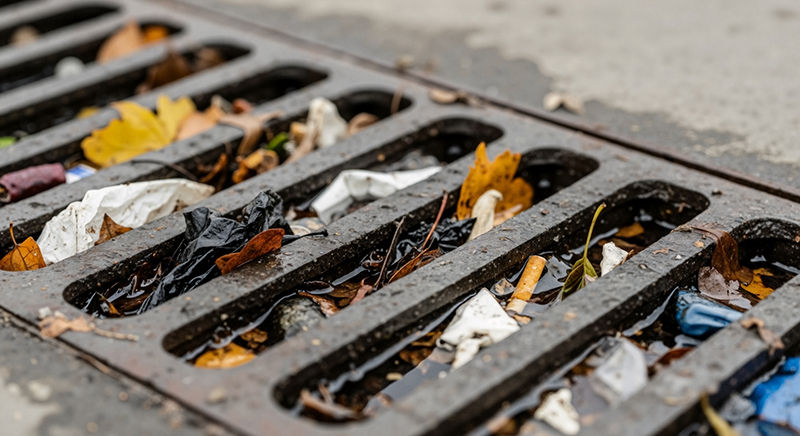
Gullies, channels, drains and catchpits need to remain clear so rainfall can move effectively from hard surfaces into the drainage network. Sediment, litter and vegetation accumulated during the summer can reduce capacity, while autumn leaf fall introduces another potential source of obstruction.
Routine cleaning, jetting and desilting can therefore form an important part of seasonal drainage preparation, particularly across commercial estates with large car parks, access roads, service areas and extensive hard landscaping.
The surrounding landscape also forms part of this system. Well-managed planted areas can help slow and absorb rainfall, while sustainable drainage features such as swales, rain gardens and attenuation areas rely on appropriate maintenance to continue performing as intended.
Coordinating grounds and drainage maintenance can therefore help keep water moving effectively across the wider estate and reduce the likelihood that relatively simple obstructions develop into operational problems during periods of heavy rainfall.
Can rainfall become a resource?
Preparing for heavier rainfall does not always mean moving water away as quickly as possible.
Where site conditions and infrastructure allow, opportunities may exist to capture, retain or slow rainfall. Rainwater harvesting, for example, can provide an alternative water source for appropriate landscape irrigation, while planted areas and sustainable drainage features can help manage water closer to where it falls.
The right approach will depend on the individual estate, but after a summer focused on water scarcity, there is value in considering rainfall as a resource as well as something that needs to be managed. It highlights why effective water management is becoming an increasingly important FM priority.
From reactive repairs to preventative drainage maintenance
Drainage is easy to overlook when it is working properly.
Yet waiting for standing water, a blockage or flooding to reveal a problem can result in greater disruption and potentially more extensive remedial work.
A preventative approach focuses instead on understanding asset condition, keeping systems clear and addressing developing issues before drainage infrastructure is placed under its greatest seasonal pressure.
At IPM, our commercial drainage services include CCTV surveys, high-pressure water jetting and desilting, gully and channel cleaning, interceptor, catchpit and tank maintenance, pump servicing, repairs and remedial works, alongside reactive and emergency support.
Drainage also forms part of a much wider approach to property management. By considering drainage alongside grounds, external surfaces and wider estate maintenance, potential issues can be identified and managed as part of the overall performance of the commercial environment.

Is your drainage ready for the change in weather?
The end of a dry summer should not mean the end of thinking about water. Instead, it provides an opportunity to shift the focus from conserving water to preparing for its return.
What are your next steps?
For facilities and estate managers, preparation can start with a few practical priorities:
Inspect underground pipework and investigate known or suspected areas of concern.
Clear gullies, channels and other surface drainage ahead of increased rainfall and autumn leaf fall.
Address developing defects before drainage systems come under greater seasonal pressure.
Review known flood-risk areas and how effectively water moves across the estate.
Maintain surrounding landscapes and sustainable drainage features to support effective water management.
After months of drought, the question for facilities managers is changing: When the rain returns, is your drainage ready for it?


