Rethinking commercial landscapes for a drier UK climate
- Jun 23
- 3 min read
Commercial landscapes are expected to work hard. They create first impressions, bring colour and character to an estate and provide attractive environments for the people who use them every day.
But as the UK experiences hotter temperatures and longer periods of dry weather, the way we design and manage those landscapes needs to evolve.
Hotter temperatures and extended dry periods are placing greater pressure on plants, soils and water resources.
For facilities and estate managers, this raises an important question: Are the landscapes we manage today designed for the climate they will experience tomorrow?

Moving beyond water-intensive landscapes
When landscapes struggle during dry periods, increasing irrigation can appear to be the obvious solution.
But greater water consumption is not a sustainable long-term strategy.
Instead, commercial estates can look at how planting design, soil condition and maintenance regimes work together to create environments that naturally require less intervention.
That could mean gradually replacing unsuitable species, reconsidering seasonal planting, improving soils or introducing planting better adapted to exposed and dry conditions.
The objective is not to remove colour or character. It is to achieve them more intelligently.
Resilience starts with good landscape design
Every commercial estate presents different conditions.
A south-facing entrance surrounded by hard landscaping will experience very different temperatures and moisture levels to a shaded woodland edge. Yet planting schemes have historically not always reflected these differences.
Understanding microclimates should therefore be fundamental to landscape design.
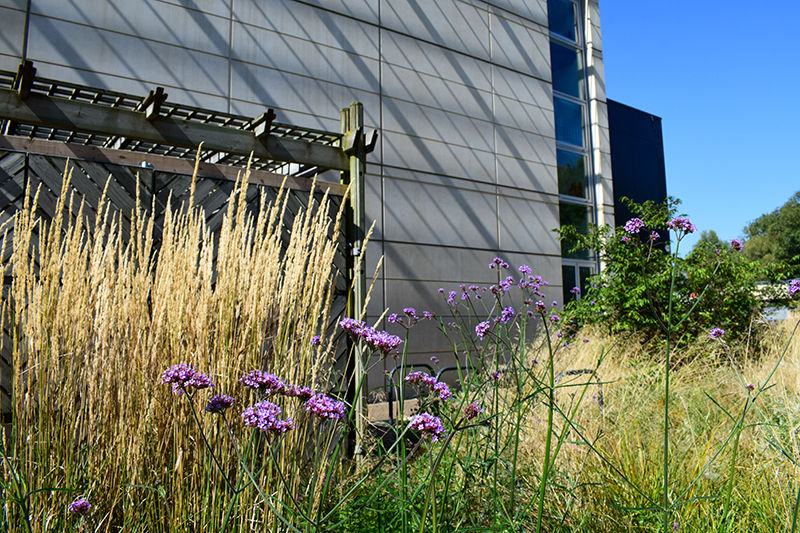
Selecting plants based on soil, aspect, exposure and expected water availability can reduce plant failures and ongoing maintenance requirements while creating landscapes better equipped to establish successfully.
Resilient planting can also support biodiversity. During prolonged dry periods, stressed plants may produce fewer flowers or flower for shorter periods, reducing the nectar and pollen available to pollinators. Selecting a diverse range of resilient plants with flowering periods across the seasons can help provide more consistent food sources while creating landscapes better equipped to cope with prolonged dry conditions.
IPM's in-house Landscape Architect works with our operational teams to incorporate practical maintenance considerations into landscape proposals from the outset. This helps ensure that what looks good on a drawing can continue performing once established.

Changing what 'good' looks like
There is also an opportunity to reconsider expectations around commercial grounds. A landscape does not need to be intensely manicured everywhere to demonstrate high standards.
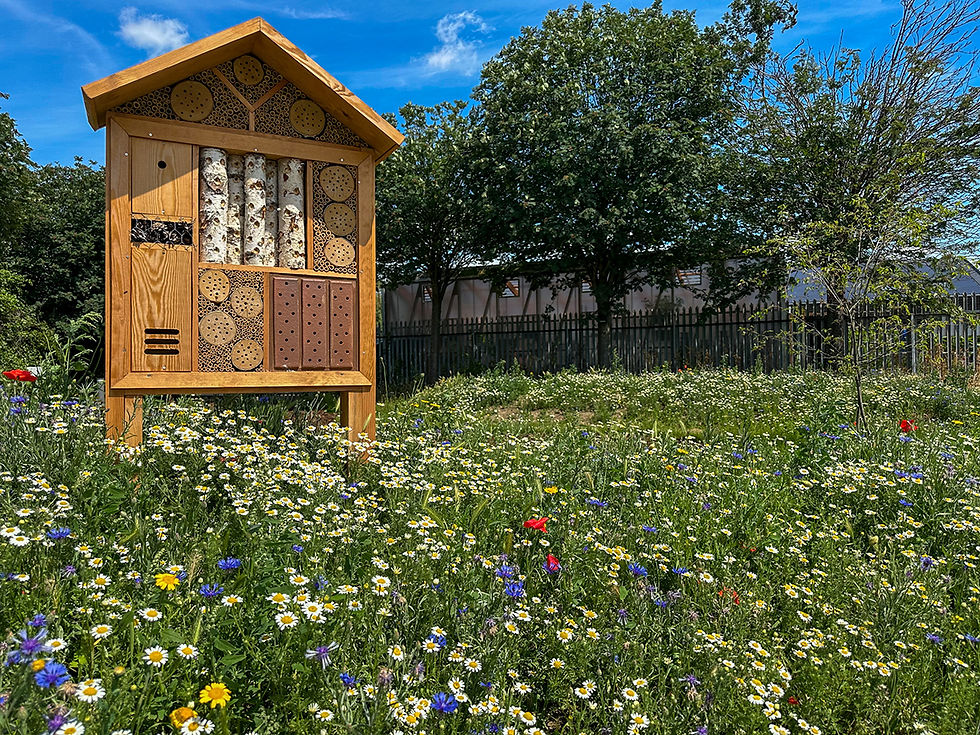
Longer grass areas, meadow planting and more naturalistic schemes can provide seasonal interest while supporting biodiversity and reducing maintenance intensity in appropriate locations.
Equally, allowing some turf to enter natural dormancy during extreme dry weather may sometimes be more responsible than using large quantities of water purely to maintain a green appearance.
The important distinction is between a landscape that has been neglected and one that is being intentionally managed in response to environmental conditions.
Targeted improvements can make a significant difference
Creating a more resilient commercial landscape does not always require starting again, but it does benefit from a considered plan.
Reviewing an existing landscape can identify underperforming planting, areas of poor soil condition and locations that require disproportionate levels of water or maintenance. These insights can then inform targeted landscape improvements, from redesigning individual beds and improving soils to introducing new planting schemes better suited to the site's conditions.
For some business parks and commercial estates, this may involve focused improvements to priority areas. For others, a wider landscape redesign can provide an opportunity to rethink planting, biodiversity, water use and long-term maintenance as part of a coordinated scheme.
The result is not just a landscape better equipped for dry conditions, but one designed to deliver greater visual impact, environmental value and long-term performance.

Designing landscapes for the future
Commercial landscapes contribute to first impressions, occupier experience, biodiversity and the wider identity of a place. Protecting those benefits means thinking beyond how a landscape performs today.
For facilities managers, landscape resilience should increasingly influence decisions around design, procurement and maintenance.
So, are the landscapes we manage today designed for the climate they will experience tomorrow? With the right planting, thoughtful design and responsive management, they can be.