From RHS Show Garden to a Permanent Home at Harwell Campus
- Aug 17
- 3 min read
Award-winning Blue Halo Garden finds a lasting legacy through a partnership between IPM Facilities, Buglife and Harwell Science and Innovation Campus.
Some gardens are designed to inspire. Others are created to leave a lasting legacy.
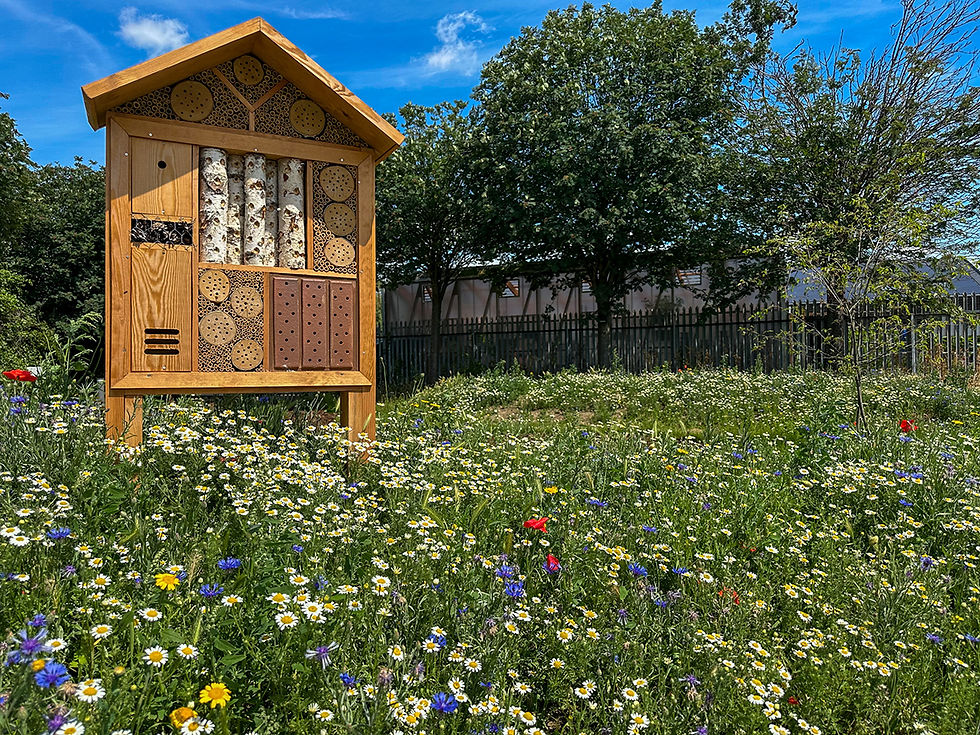
Following its successful debut at the inaugural RHS Badminton Flower Show, the award-winning Blue Halo Garden has begun an exciting new chapter after being carefully relocated to its permanent home at Harwell Science and Innovation Campus, part of the ARC Group, through a partnership between IPM Facilities and Buglife. The garden was awarded a Silver-Gilt Medal in the Pocket Planting category at the show.
As a Corporate Member of Buglife, IPM was proud to support the dismantling, transportation and reinstallation of the garden, ensuring its impact extends far beyond the five-day flower show.

A garden inspired by science
The Blue Halo Garden is unlike a traditional show garden.
Designed by Natalya Scott and Lucie Dannemann-Scott, the mother and daughter team created the garden to showcase the fascinating ways plants communicate with pollinating insects through colour, light and structure. Drawing inspiration from the research of plant scientists Dr Heather Whitney, Dr Edwige Moyroud and Professor Beverley Glover, the garden reveals the hidden signals flowers use to attract pollinators.
At its heart is the remarkable "blue halo" effect. Rather than producing large amounts of blue pigment, some flowers create microscopic ridges on their petals that scatter ultraviolet light, creating a shimmering blue halo that is highly visible to bees but almost invisible to the human eye. The garden brings this phenomenon to life through carefully selected planting, recycled blue glass aggregate and striking sculptural features.
The design also celebrates two other remarkable pollinator adaptations:
A warm, brightly coloured central planting inspired by the "hot centre" found in many flowers that attracts basking pollinators.
Sculptural bug houses that represent the microscopic conical cells on flower petals, helping insects grip while feeding.
A perfect fit for Harwell Campus
There are few places better suited to the Blue Halo Garden than Harwell Campus.
Home to one of the UK's leading science and innovation communities, Harwell brings together world-leading research organisations, pioneering technology businesses and scientific discovery. A garden celebrating cutting-edge plant science and biodiversity therefore provides a natural extension of the campus environment.
Already responsible for maintaining the extensive landscape across Harwell Campus, IPM recognised the unique opportunity to help preserve the garden while creating a lasting feature that complements the campus' commitment to innovation, sustainability and wellbeing.
Rather than becoming a temporary exhibit, the garden will now continue educating, inspiring and supporting wildlife for years to come.
Working together to create a lasting legacy
Relocating a show garden is a significant undertaking.
Working closely with Buglife and ARC, IPM carefully dismantled the entire installation following RHS Badminton before transporting every component to Harwell Campus, where it is now being reconstructed in its permanent setting.
The project demonstrates the value of collaboration between organisations that share a commitment to biodiversity, education and environmental stewardship.

As a Corporate Member of Buglife, IPM is proud to support the charity's work protecting invertebrates and creating better habitats across the UK. This project provided a unique opportunity to transform that partnership into tangible action while ensuring an award-winning garden continues delivering ecological and educational value beyond the showground.
Celebrating the team behind the Blue Halo Garden
At the heart of the Blue Halo Garden is the vision of mother-and-daughter design team Natalya Scott and Lucie Dannemann-Scott, who developed the original concept and overall design.
Their backgrounds bring together many of the disciplines represented within the garden itself. Natalya has a background in Landscape Architecture and now focuses on Art and Garden Design, while Lucie is studying Biochemistry at Cardiff University and hopes to pursue a career in Plant Science.
Together, they have transformed complex scientific research into an engaging garden that allows visitors to experience some of the remarkable ways plants attract and interact with pollinators.

The garden was brought to life by a wider creative team, with planting by Adam Boustead, artwork by Diana Starkiss, graphics by Maisie Scott-Leighton, and metalwork by Rich Bindon of Solo Metal Arts. Together, their work combines scientific research, horticulture, art and design to create a garden that is as thought-provoking as it is visually striking.
Supporting biodiversity beyond the flower show
For IPM, projects like this demonstrate how thoughtfully designed landscapes can continue delivering value long after an event has finished.
By giving the Blue Halo Garden a permanent home, the partnership has ensured the garden will continue supporting pollinators, encouraging conversations around biodiversity and connecting people with the fascinating science behind the natural world.
It is another example of how collaboration can create meaningful environmental outcomes while enriching the places where people work, innovate and connect with nature.